
Christina Applegate Reveals the Mistake She Made After Her Double Mastectomy for Breast Cancer: ‘It Was Bulls—t’
The Truth Behind Christina Applegate’s Breast Cancer Journey

In 2008, Emmy-winning actress Christina Applegate was confronted with a life-altering diagnosis: early-stage breast cancer. At just 36 years old, a routine MRI revealed the presence of cancer, and further testing showed she carried the BRCA1 gene mutation, which significantly increases the risk of developing breast cancer. Faced with these daunting facts, Applegate made the difficult decision to undergo a double mastectomy — a choice that would not only save her life but also leave a lasting emotional impact.
Following her surgery, Applegate was declared cancer-free. Determined to use her experience to help others, she went public with her story and founded an organization aimed at raising awareness about early detection and providing support to high-risk women who might otherwise struggle to afford screenings. However, despite her outward bravery and advocacy, Applegate later revealed that she made a critical mistake in how she presented her experience to the public.
The ‘Blessing’ Misconception: A Moment of Regret
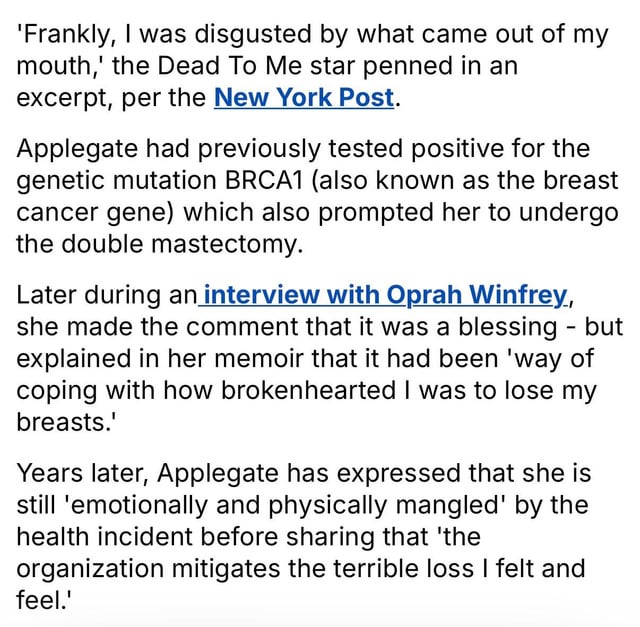
Shortly after her surgery, Applegate appeared on “The Oprah Winfrey Show,” a platform that could have been a powerful space for raw honesty and connection. Instead, influenced by advice from fellow breast cancer survivor Melissa Etheridge, she framed her experience as a “blessing” — a fresh start and an opportunity to change her life. Etheridge had encouraged her to see the mastectomy as a positive turning point, but Applegate later admitted that this perspective did not reflect her true feelings.
In her memoir, You With the Sad Eyes, Applegate candidly calls that interview “bulls—t.” She explains that she was “acting like Little Ms. Warrior,” putting on a brave face while internally feeling brokenhearted and devastated by the loss of her breasts. Rather than offering comfort, she fears that her portrayal may have alienated or hurt other women who were enduring the raw pain and fear of cancer treatment.
Applegate’s honesty sheds light on the complex emotional realities many breast cancer survivors face — realities that are often glossed over in favor of inspirational narratives. She emphasizes that no amount of plastic surgery or public positivity can fully compensate for the intimate and profound loss that comes with such a surgery.
How Christina Applegate’s Experience Changed the Conversation About Cancer
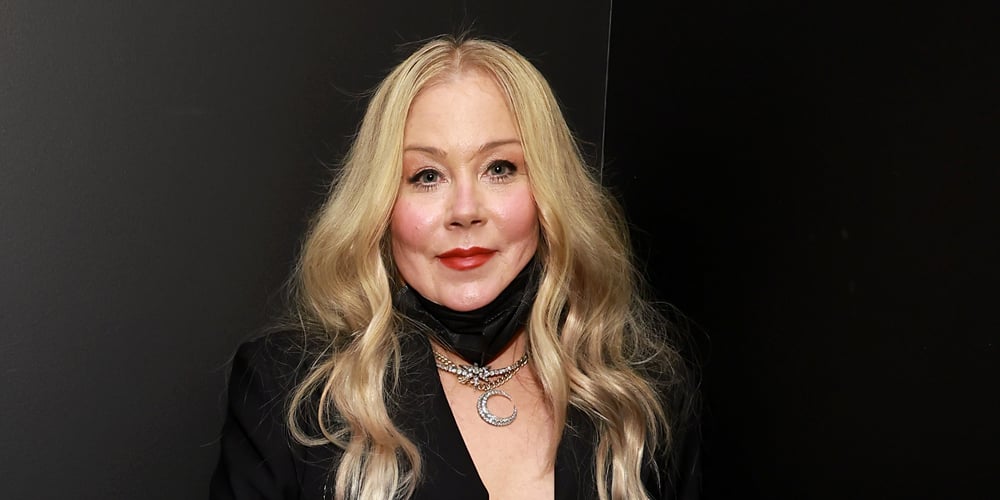
Applegate’s reflections have had a significant impact on how she approaches illness and advocacy today. After being diagnosed with multiple sclerosis (MS) at age 49, she applied the lessons learned from her breast cancer journey to her new health challenges. MS, a chronic autoimmune disease that disrupts nerve signals, presents a very different and ongoing battle compared to cancer.
Her message now centers on radical honesty rather than forced optimism. She stresses the importance of acknowledging the pain, fear, and frustration that come with serious diagnoses instead of insisting that every experience must be framed as a blessing. This approach fosters genuine support and understanding for those facing health crises.
By sharing her story with such transparency, Applegate encourages others to embrace their vulnerabilities and reject the pressure to appear strong or positive at all times. Her advocacy highlights the need for compassionate conversations that validate the full spectrum of emotions experienced by patients and survivors.
The Importance of Early Detection and Support
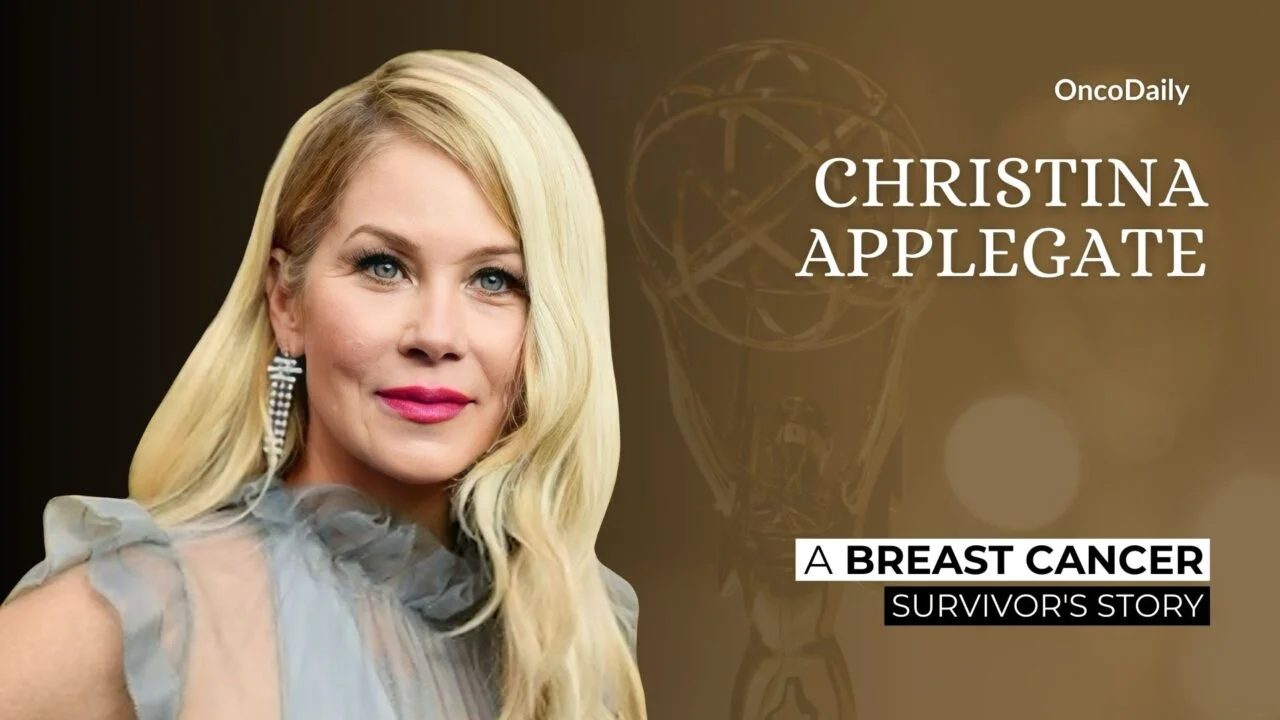
Christina Applegate’s journey also underscores the critical role of early detection in breast cancer survival. Her diagnosis came from a routine MRI, which allowed for treatment at an early stage. Women with a family history of breast cancer or known genetic mutations like BRCA1 should prioritize regular screenings and consult healthcare professionals about preventive measures.
Applegate’s foundation continues to support women at high risk by helping them access affordable screenings and raising awareness about breast cancer prevention. Her work reminds us that while medical advances have improved outcomes, emotional and psychological support remains essential for those affected.
Conclusion
Christina Applegate’s candid revelations about her double mastectomy experience offer a powerful lesson in the importance of honesty and empathy in the face of cancer. By rejecting the notion that her journey was simply a “blessing,” she opens the door for more authentic conversations about the challenges of breast cancer and chronic illness. Her story is a reminder that healing involves acknowledging pain as much as celebrating survival.
If you or a loved one is navigating a breast cancer diagnosis, remember that it’s okay to feel vulnerable and seek support. Early detection saves lives, and honest dialogue can provide comfort and strength during difficult times. Stay informed, stay connected, and don’t hesitate to reach out to organizations dedicated to helping those affected by breast cancer.
Take the first step today—schedule your screening or support someone in their journey. Your health and well-being matter.