
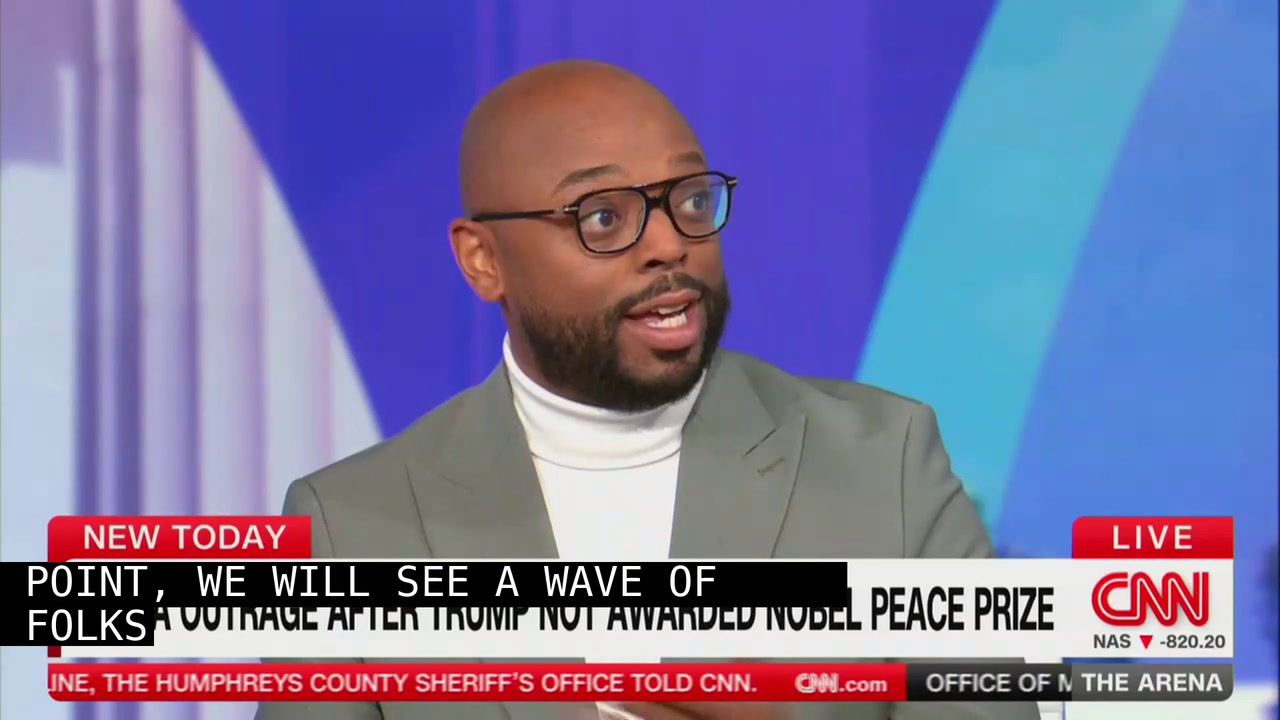
Scott Jennings Crashes Out On CNN Over Trump’s Nobel Peace Prize Loss
Scott Jennings and the Debate Over Trump’s Nobel Peace Prize
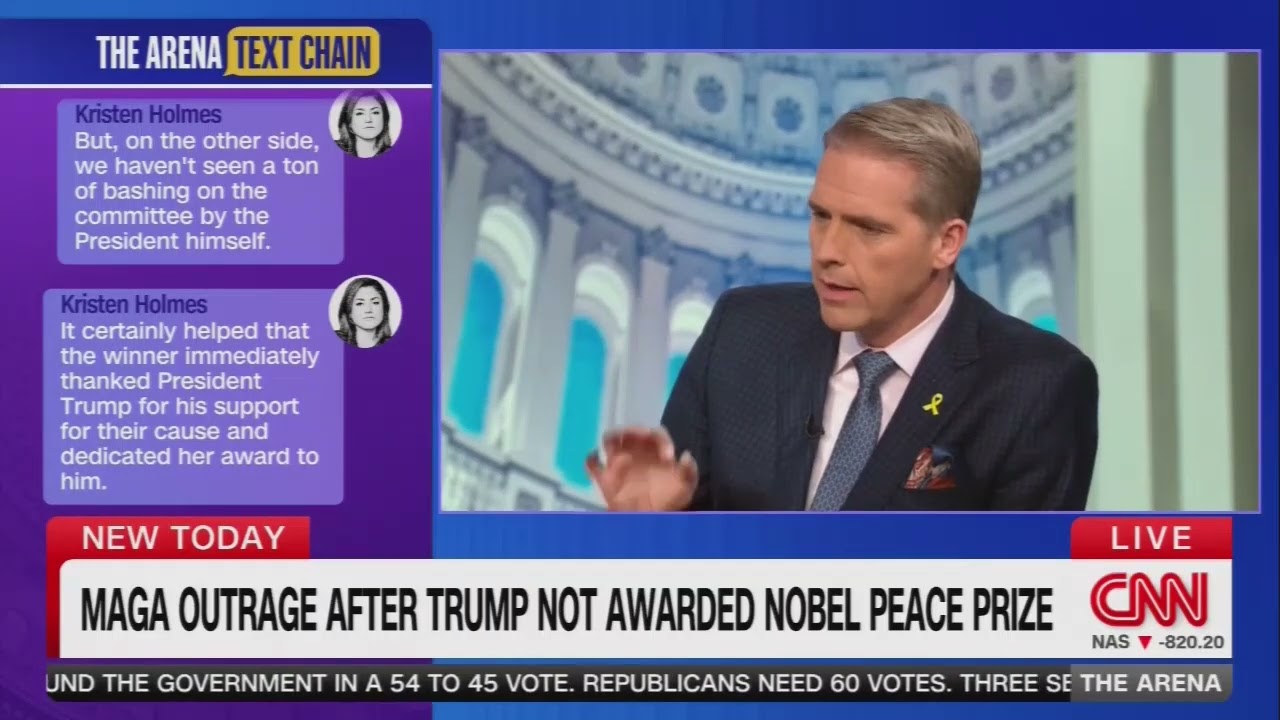
The recent discussion on CNN involving political commentator Scott Jennings ignited a fiery debate over President Donald Trump’s failure to win the Nobel Peace Prize. Jennings, a known supporter of Trump, passionately argued that the former president deserved the prestigious award due to his foreign policy achievements, including brokering peace agreements and mediating conflicts. However, his stance met strong opposition from fellow panelists who highlighted the complexities and controversies surrounding Trump’s tenure.
Trump had been actively promoting his candidacy for the Nobel Peace Prize, claiming credit for ending multiple global conflicts during his administration. Despite his efforts, the Nobel Committee awarded the prize to María Corina Machado, a Venezuelan opposition leader recognized for her pro-democracy activism. This outcome frustrated many Trump supporters and led to a tense exchange on CNN, where Jennings expressed his disappointment and criticized those who opposed Trump’s nomination.
The Key Points of Contention in the CNN Discussion

During the CNN segment, Scott Jennings emphasized Trump’s role in negotiating the Abraham Accords, a series of normalization agreements between Israel and several Arab nations. He also referenced Trump’s military actions and diplomatic initiatives as evidence of his peace-building credentials. Jennings stated, “I hope he does get it, because at the end of the day, it will piss off all the right people. And I just, I would be so happy.”
Conversely, other panelists, including Jamal Simmons, countered Jennings’ arguments by pointing out the domestic unrest and political turmoil that characterized much of Trump’s presidency. Simmons noted that despite Trump’s international influence, his administration faced criticism for policies that some viewed as divisive or contradictory to the ideals of peace. He argued that the Nobel Peace Prize committee likely considered these factors when making their decision.
The debate also touched on the broader political dynamics, with Jennings accusing Democrats of being unable to support American success due to their opposition to Trump. This assertion underscored the polarized nature of current American politics, where achievements are often viewed through partisan lenses.
Understanding Why Trump Did Not Win the Nobel Peace Prize
The Nobel Peace Prize is awarded to individuals or groups who have made significant contributions to peace efforts worldwide. While Trump’s administration did achieve notable diplomatic milestones, such as the Abraham Accords, several factors contributed to his exclusion from the prize.
Firstly, the Nobel Committee considers both international and domestic contexts. Trump’s presidency was marked by internal divisions, protests, and controversial policies that may have influenced the committee’s decision. Additionally, the timing of nominations and the committee’s deliberations meant that Trump’s recent actions were scrutinized alongside ongoing global conflicts.
Secondly, the award to María Corina Machado highlighted the committee’s focus on grassroots democracy movements and human rights activism. Machado’s leadership in Venezuela’s pro-democracy efforts resonated with the committee’s values, contrasting with the more state-centric achievements attributed to Trump.
Finally, the Nobel Peace Prize often reflects a consensus among international observers, which can be difficult to achieve for politically polarizing figures. Trump’s contentious relationship with various global actors and his administration’s approach to diplomacy may have limited his appeal to the committee.
Implications of the Nobel Peace Prize Outcome for Trump and U.S. Politics

The fallout from Trump’s Nobel Peace Prize loss extends beyond the award itself, influencing political narratives and public perceptions. For Trump supporters like Scott Jennings, the outcome represents a missed opportunity to validate the former president’s foreign policy legacy. It also serves as a rallying point to criticize perceived biases within international institutions and domestic political opponents.
For critics, the decision reinforces concerns about Trump’s suitability as a peace advocate, emphasizing the importance of holistic evaluations of leadership. The debate on CNN exemplifies the deep divisions in American political discourse, where symbolic recognitions such as the Nobel Peace Prize become battlegrounds for ideological conflicts.
Moreover, the discussion highlights the challenges faced by political figures in balancing domestic governance with international diplomacy. The Nobel Peace Prize outcome may prompt future administrations to consider how their actions are perceived globally and the impact of internal policies on their international standing.
The Role of Media in Shaping the Nobel Peace Prize Narrative
Media outlets like CNN play a crucial role in framing the discourse around high-profile events such as the Nobel Peace Prize. The heated exchange between Scott Jennings and other panelists illustrates how media platforms can amplify partisan perspectives and influence public opinion.
By presenting contrasting viewpoints, the media encourages viewers to engage with complex issues, though it can also deepen polarization. The coverage of Trump’s Nobel Peace Prize loss demonstrates the intersection of journalism, politics, and public sentiment, shaping how historical events are recorded and remembered.
Conclusion
Scott Jennings’ passionate defense of Donald Trump’s Nobel Peace Prize candidacy on CNN underscores the ongoing political tensions surrounding the former president’s legacy. While Trump’s diplomatic efforts earned recognition from his supporters, the Nobel Committee’s decision to award María Corina Machado reflects a broader evaluation of peace and democracy contributions. This episode highlights the complexities of political acclaim and the role of media in shaping public debates.
If you found this analysis insightful, stay informed by subscribing to our newsletter for the latest updates on political developments and international affairs. Join the conversation and share your thoughts on the evolving story of the Nobel Peace Prize and its impact on global politics.